Bangladesh's LDC graduation was weeks away. Now it is 2029.
The UN gave Bangladesh three more years. What switches off, who gains time, what rivals are doing, and why Europe's clock did not move.

Trade · LDC graduation · Textile waste
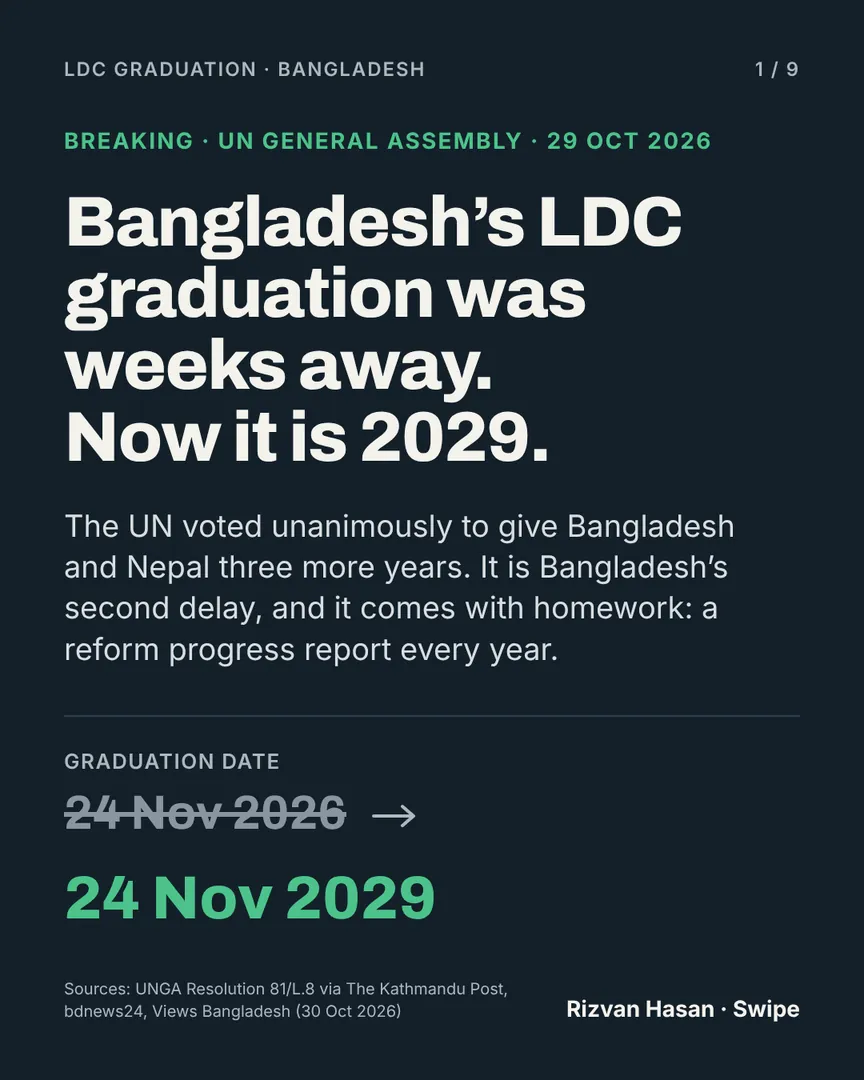
On 29 October, the UN General Assembly voted unanimously to give Bangladesh and Nepal three more years. It is Bangladesh's second delay, and it comes with homework: a reform progress report to the UN every year.
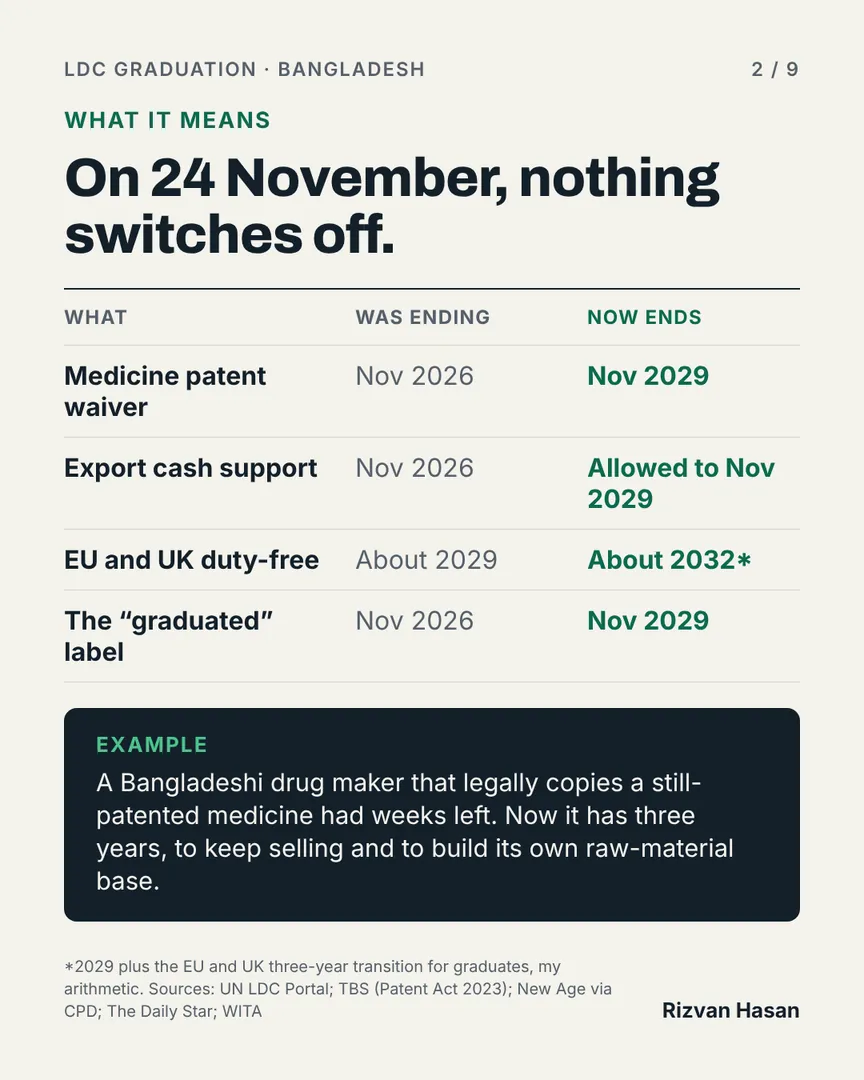
What it means: on 24 November, nothing switches off. A drug maker legally copying a still-patented medicine had weeks left; now it has three years. Export cash support can legally run to 2029. EU and UK duty-free cover, with their three-year transition for graduates, now stretches to about 2032.
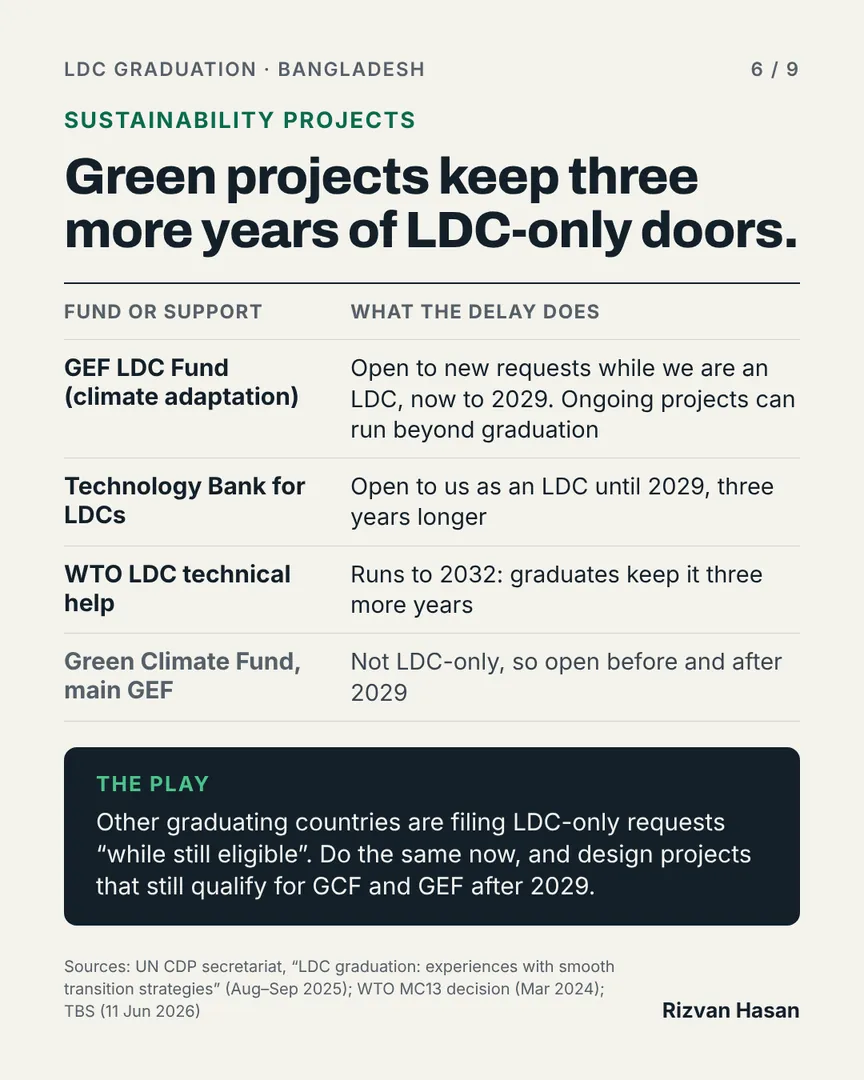
It also keeps LDC-only green money, like the GEF's LDC Fund for climate adaptation, open to new Bangladeshi requests until 2029.
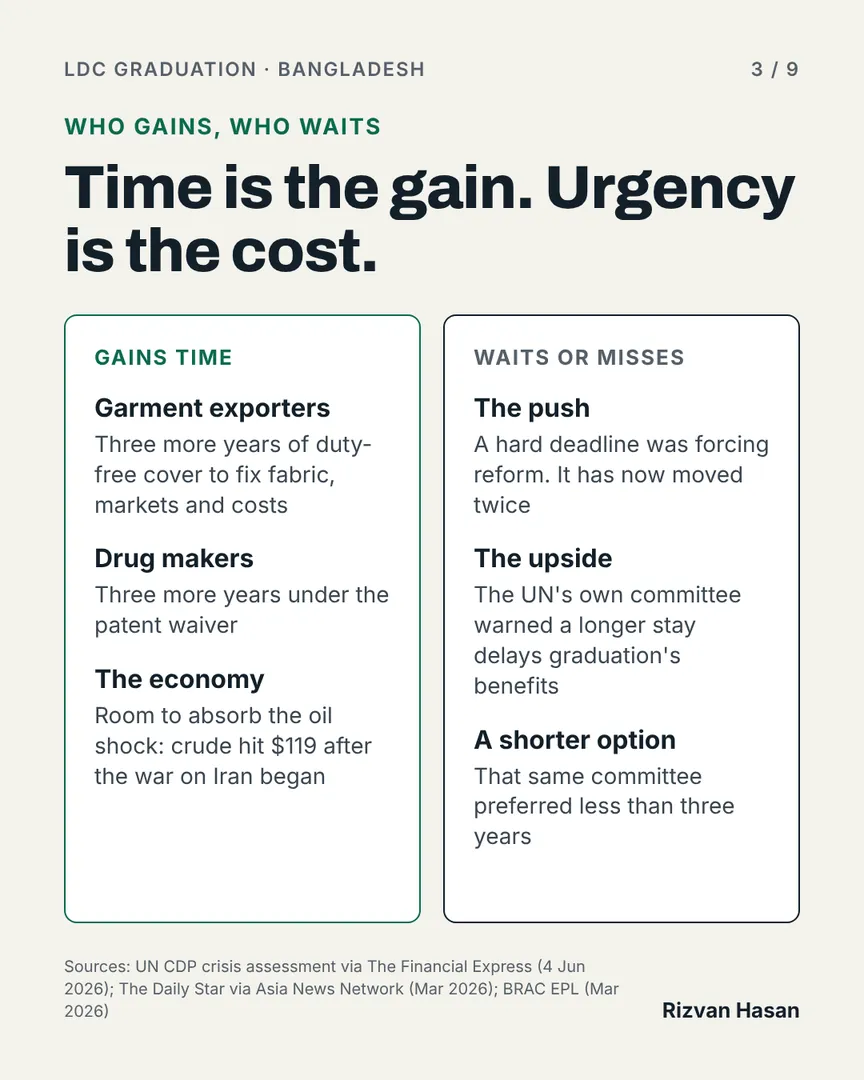
What we give up: urgency. The UN's own expert committee wanted a shorter extension, and warned that a longer stay delays graduation's benefits.
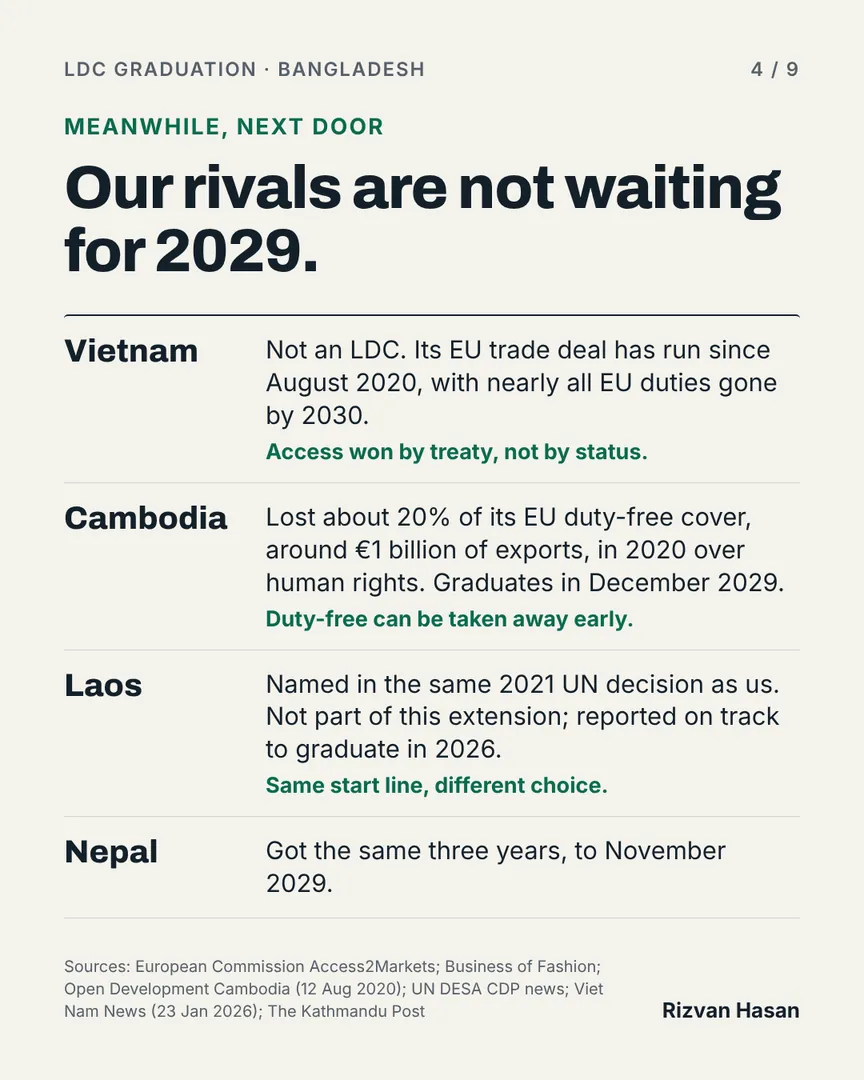
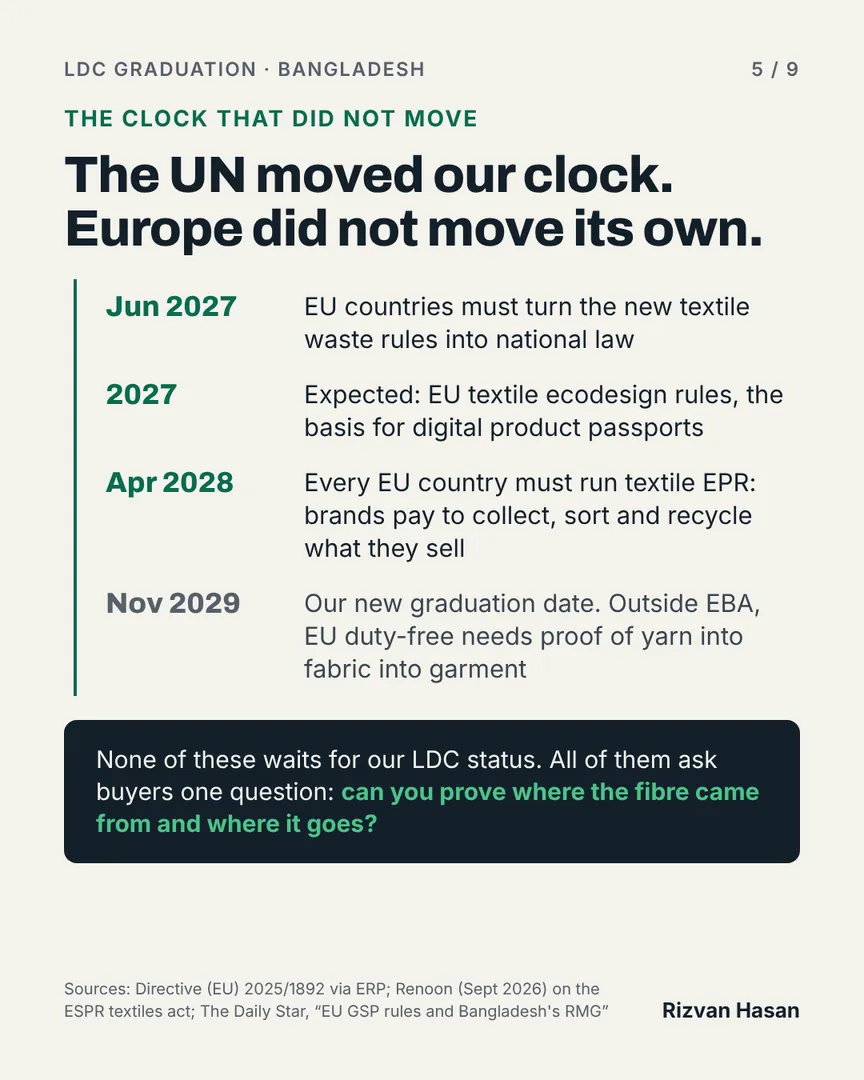
Meanwhile, Vietnam has had an EU trade deal since 2020. Cambodia lost about 20% of its EU duty-free cover that same year. And Europe did not move its clock: every EU country must run textile waste-fee schemes by April 2028.
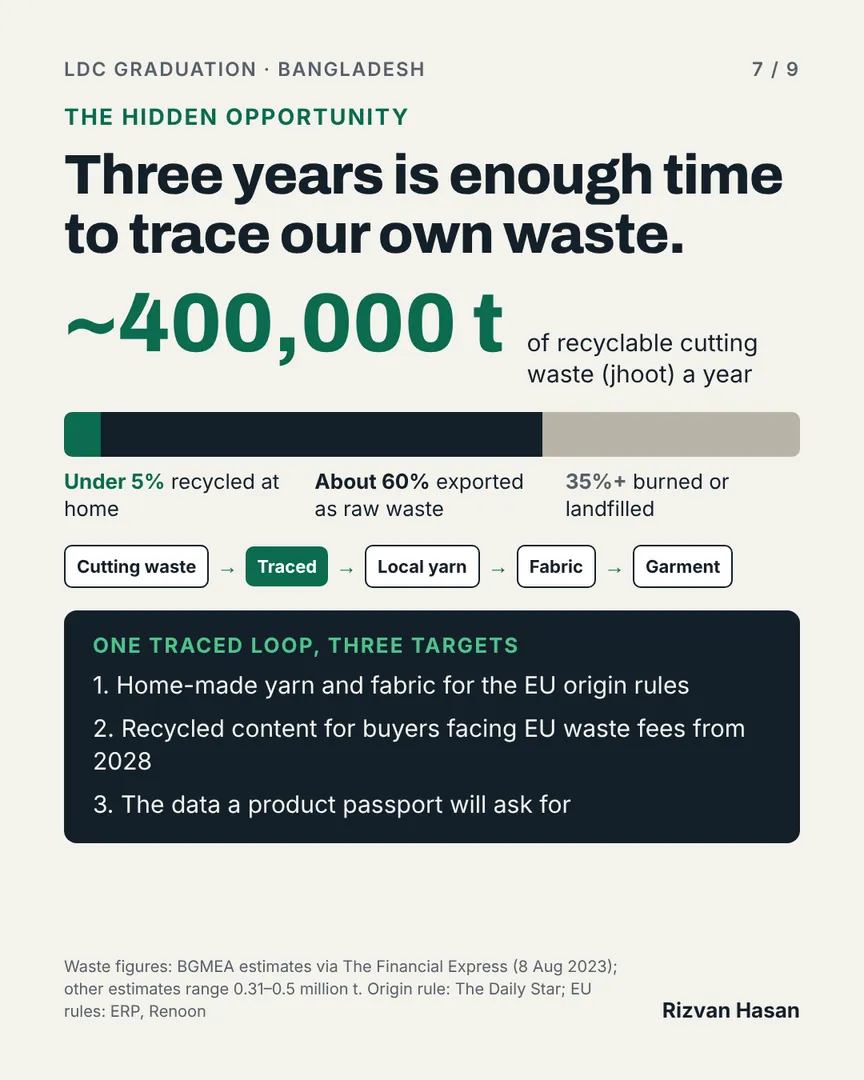
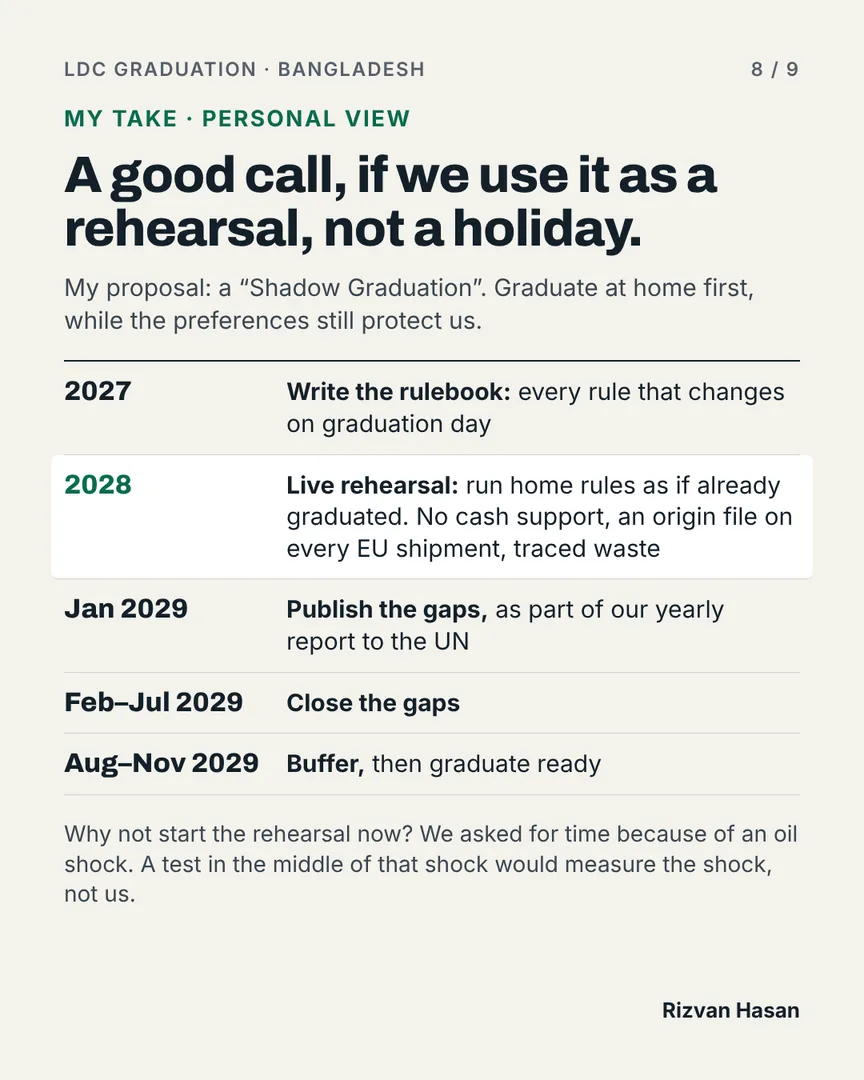
My take: a good call, if we use it as a rehearsal, not a holiday. And trace our ~400,000 tonnes of yearly cutting waste into local yarn. That one loop helps with EU origin rules, recycled content and product-passport data at once.
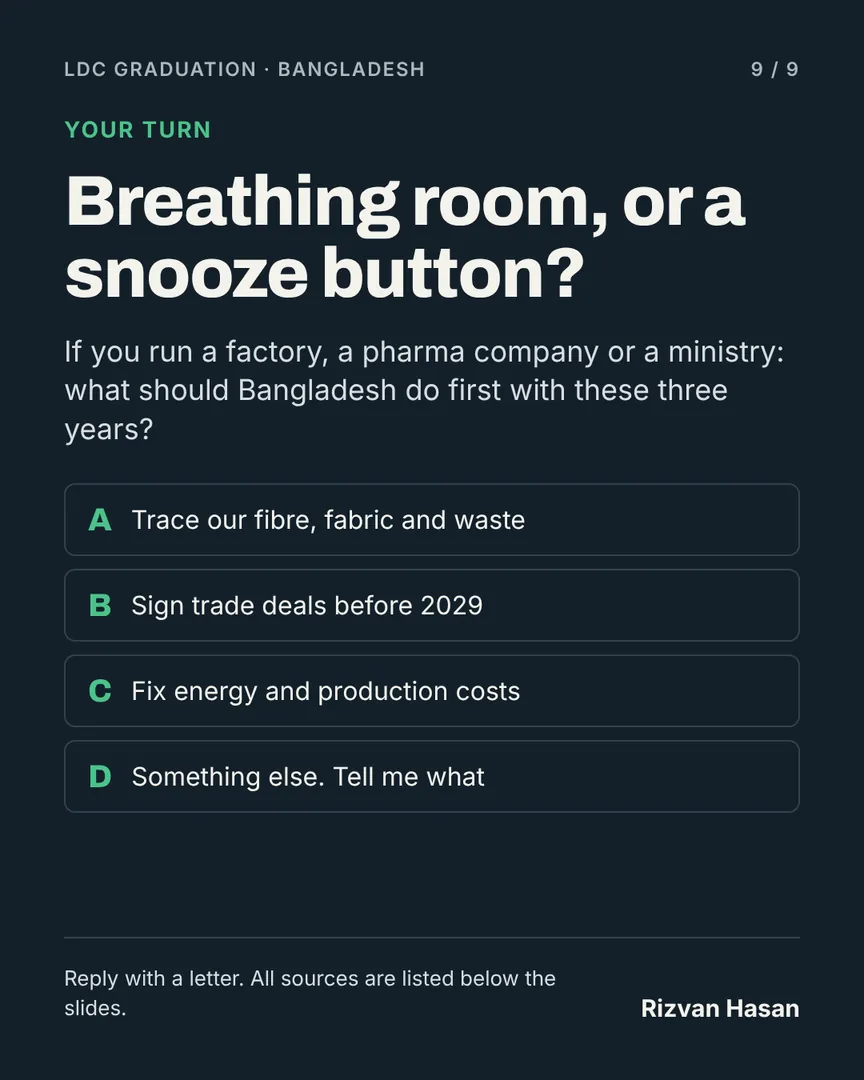
Breathing room or snooze button? What should Bangladesh do first with these three years? Pick A, B, C or D on the last slide.
সময় পেলাম, এবার কাজের পালা।
Sources
- UN General Assembly vote, 29 Oct 2026: The Kathmandu Post, bdnews24, Views Bangladesh
- UN CDP crisis assessment, 4 Jun 2026: The Financial Express
- EU textile waste rules, Directive (EU) 2025/1892: ERP
- Waste figures, BGMEA estimates, 8 Aug 2023: The Financial Express
- Sustainability funds: UN CDP secretariat brief, 2025, WTO: graduation from LDC status
- Rivals: European Commission: EU-Vietnam FTA, Open Development Cambodia, UN DESA
Figures are as reported on the date of publishing. Spot an error? Use the contact page.